Lebanon: Debate over ‘fake plot’ to overthrow government
Lebanon: Debate over ‘fake plot’ to overthrow government
Residents of Lebanon are now scrutinizing reports that Israel’s bombing of Beirut prevented a government overthrow. The controversy highlights the country’s deep political rifts as renewed discussions between Israel and Lebanon unfold. Some conservative analysts claim that the Israeli strike last week, which killed over 300 and injured more than 2,000, disrupted a planned coup by Hezbollah.
Israel’s Role in Averting Crisis?
Erick Stakelbeck, a prominent American commentator with a YouTube channel focused on Middle Eastern affairs, suggested that Israel uncovered a political scheme. “It seems Israel discovered this plot by Hezbollah, aiming to dismantle the Lebanese government,” he stated two days after the attack. “Thanks to the Israeli air force, Lebanon likely avoided a major crisis.” His platform has amassed over a million subscribers.
“It seems Israel uncovered this plot by [Lebanese group] Hezbollah to essentially overthrow the Lebanese government,” Erick Stakelbeck, a conservative American commentator with a YouTube show on Middle Eastern affairs, pronounced enthusiastically, two days after the attack. “And Lebanon apparently averted a major disaster here, thanks to the Israeli air force.”
Despite these claims, no official confirmation has emerged from Hezbollah or the Lebanese and Israeli governments. DW’s inquiries to Israel’s defense ministry and military remained unanswered at the time of publication.
Rumors Begin with a Social Media Post
The initial mention of the coup attempt was attributed to a social media user named Sufyan al-Samarrai, known for his anti-Iran and pro-Israel views. He has nearly 225,000 followers. Just an hour after the attacks on Wednesday, al-Samarrai tweeted in Arabic that “Israel thwarted a coup against the Lebanese government.”
He did not cite a source for his claim, which was later echoed by other users with similar perspectives. Regional outlets, including Arabic and French-language media in Lebanon, picked up the story, amplifying its reach.
Factors Behind the Coup Narrative
Lebanon’s prime minister announced on April 12 his decision to skip a U.S. meeting with Israel, citing “current internal circumstances.” Some saw this as an indication of staying to manage a potential coup.
Additional fuel for the narrative came from rumors that Hezbollah members were on a Zoom call when targeted. A Zoom spokesperson clarified that IP addresses only reveal approximate geographic data, not precise addresses. They noted that the company does not retain such details, making them insufficient for military strikes.
Hezbollah’s Political Influence
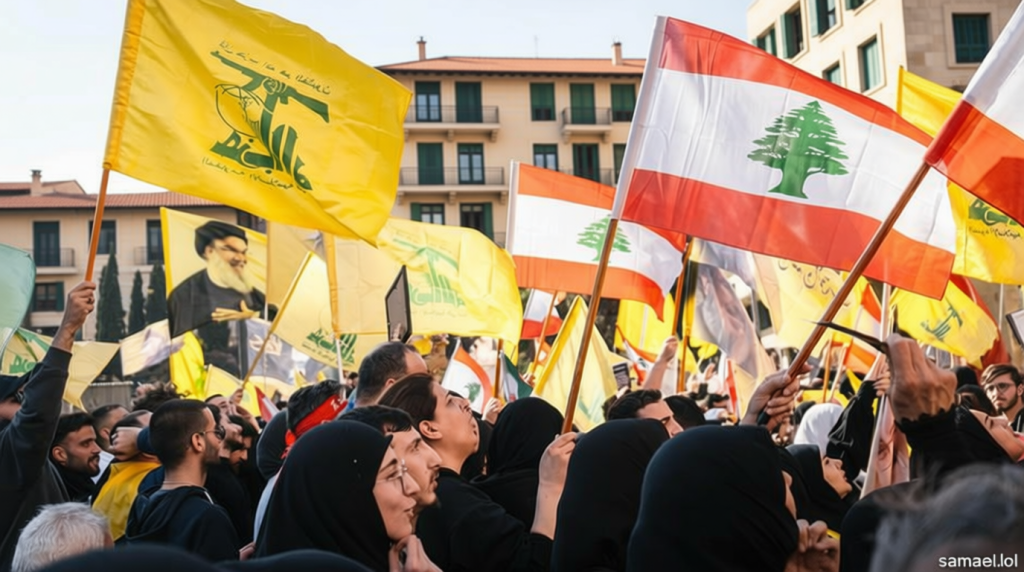
Hezbollah holds a significant position in Lebanon, claiming to represent the nation’s Shiite Muslim community, which constitutes roughly 30% of the population. Often described as “a state within a state,” the group exerts considerable control through its political outreach and military strength, surpassing Lebanon’s national army.
While Hezbollah asserts it defends Lebanese sovereignty and is engaged in a conflict with Israel in the south, it maintains close ties with Iran. Following the assassination of Iran’s supreme leader in early March, Hezbollah launched rocket attacks on Israel, prompting increased Israeli operations in Lebanon.
Recent Tensions and Diplomatic Talks
Hezbollah’s critics argue the group has effectively taken over parts of the Lebanese state. They accuse it of dragging the country into regional conflicts for foreign interests.
Recently, senior Hezbollah figures have expressed discontent with the government’s negotiations with Israel. Talks between the two nations began in Washington, marking a pivotal moment in their ongoing relationship.